Brand + Product · The JOAT Journal
Yes, I Helped Build Vagina Pants.
The very real story of how one blunt conversation became years of product development, a complete brand, international sourcing, and a $45,364 Kickstarter campaign.
Hot mom by nature. Advocate by choice. Luxury concierge by profession. Vagina-pant inventor by an extremely specific series of events.
← Back to Journal entries
$45,364Funded on Kickstarter
The honest beginning
The company started during a walk, although I was not technically on the walk.
My co-founder came back after unexpectedly getting her period and said she finally knew what we needed to make: period leggings.
I looked at her and said, “Oh my God. I have already been thinking about creating some sort of vagina pants.”
That is quite literally the start of VWEAR LOVE. We laughed and then immediately started workshopping. Within minutes, we were talking about everything we hated about the options already on the market, what women were still being asked to tolerate, and exactly what ours would need to do differently.
We started developing the idea in 2022. At that point there was no finished product, no campaign, no revenue, and absolutely no guarantee that the thing we were sketching would ever become something another person could buy. There was just a very specific problem, two women convinced we could solve it better, and a lot of work ahead of us.
What we were actually trying to make
Period protection that did not feel like a punishment.
My co-founder’s biggest nonnegotiable was protection. She wanted something genuinely dependable, something that could give a woman enough confidence to stop planning her entire day around the possibility of bleeding through her clothes.
My obsession was everything touching the body. I cared about the fabrics, the chemicals, the sustainability, the comfort, the fit, and whether the product supported women in an actual, played-out way instead of borrowing the language of empowerment for the marketing.
The easiest shorthand I used during development was that I wanted them to feel like a Lululemon Align legging, but with the properties those leggings were never designed to provide. Soft, smooth, comfortable enough that you forgot you were wearing period protection, with support and shaping through the waist, and the performance technology we had spent years developing underneath it.
They needed to be leggings someone would voluntarily reach for, not something she tolerated because she was on her period. Protected was not enough. I wanted her to put them on and still feel good in her body.
That meant working through the absorbent gusset, the body-contact layer, moisture management, odor control, antifungal properties, cooling, collagen-infused fabric, free-cut edges, compression, shaping, washability, and the reality that bodies bloat, leak, sweat, heal postpartum, experience discharge, and occasionally betray us during a sneeze.
The final product language became VLUXE™, a name and product world I helped create for the proprietary fabric concept. The current brand describes the leggings as anti-odor, antifungal, cooling, collagen-infused, free-cut, and paired with an absorbent moisture-wicking center panel. The body-contact layer was developed around organic cotton and a standard that excluded PFAs and other harsh chemicals.
My lane inside the company
I became the creative brain of the brand.
We naturally divided the work around our strengths. My co-founder carried more of the business-facing and operational responsibilities. I led the brand identity, product world, creative direction, website, collections, campaign language, social strategy, content, and the way we would explain an intimate and technically complicated product without making women feel embarrassed, medicalized, or spoken down to.
I came up with the company name, helped direct the logo development with a professional designer, established the color palette and visual personality, created the name VLUXE, built the website, shaped the collections, wrote and organized the public-facing product story, co-wrote and co-produced the commercial, helped direct it, appeared in it, and led much of the marketing behind the launch.
I also built the original social presence. The original launch account passed 1,000 followers during its first month, before there was a finished product sitting in anyone’s hands. That early audience mattered because we were not introducing another familiar pair of leggings. We were asking people to understand a new product category, trust the technology, talk openly about leaks, and eventually fund the idea before it existed at scale.
There were years where the brand was very real, the workload was very real, and the money coming in was not. That is one of the least glamorous truths about building something from scratch. You can spend an entire day in meetings, rewrite a page at midnight, review fabric on the weekend, direct a shoot, solve a vendor problem, answer messages, and still technically be working for the future version of the company instead of receiving a paycheck from the current one.
I do not say that for sympathy. I say it because “helped build a brand” can sound like I picked colors for a few weeks. This was years of unpaid founder labor, decisions, revisions, research, travel, product testing, creative work, and carrying a vision before the public had any reason to believe in it.
The team grew with the work
By then, it was no longer only the two of us. My original co-founder served as CEO, I was co-owner and Chief Creative Officer, and we brought on a Chief Financial Officer and Chief Operating Officer as permanent members of the core team.
We also partnered with several women-owned companies and outside specialists who helped us navigate sourcing, fabric development, manufacturing, and the parts of building a company that no founder should pretend to know alone. The vision was ours, but getting it into the world took a real team.
The website was never supposed to be only a store
I wanted the brand to be useful even when somebody was not buying anything.
One of the things I am proudest of creating was the support and resource library.
I wanted someone to be able to arrive looking for leggings and leave with information that might help her understand her body, prepare a child for a first period, find a therapist, locate legal support, leave an unsafe relationship, navigate postpartum mental health, find disability or neurodivergence resources, or simply feel less alone.
The original library included free and inclusive resources for women, children, parents, survivors, LGBTQ+ people, immigrant families, disabled and neurodivergent people, and anyone trying to make sense of a body or life that did not come with clear instructions.
The introduction said, “You’re allowed to need support, and you’re never alone.” That was not filler copy. It was my version of women supporting women in an actual, measurable way. Not a quote over a stock photo. Something useful.
Explore the Support and Resource Library →Then we went to China
I did not want to build a product around emailed promises and fabric swatches.
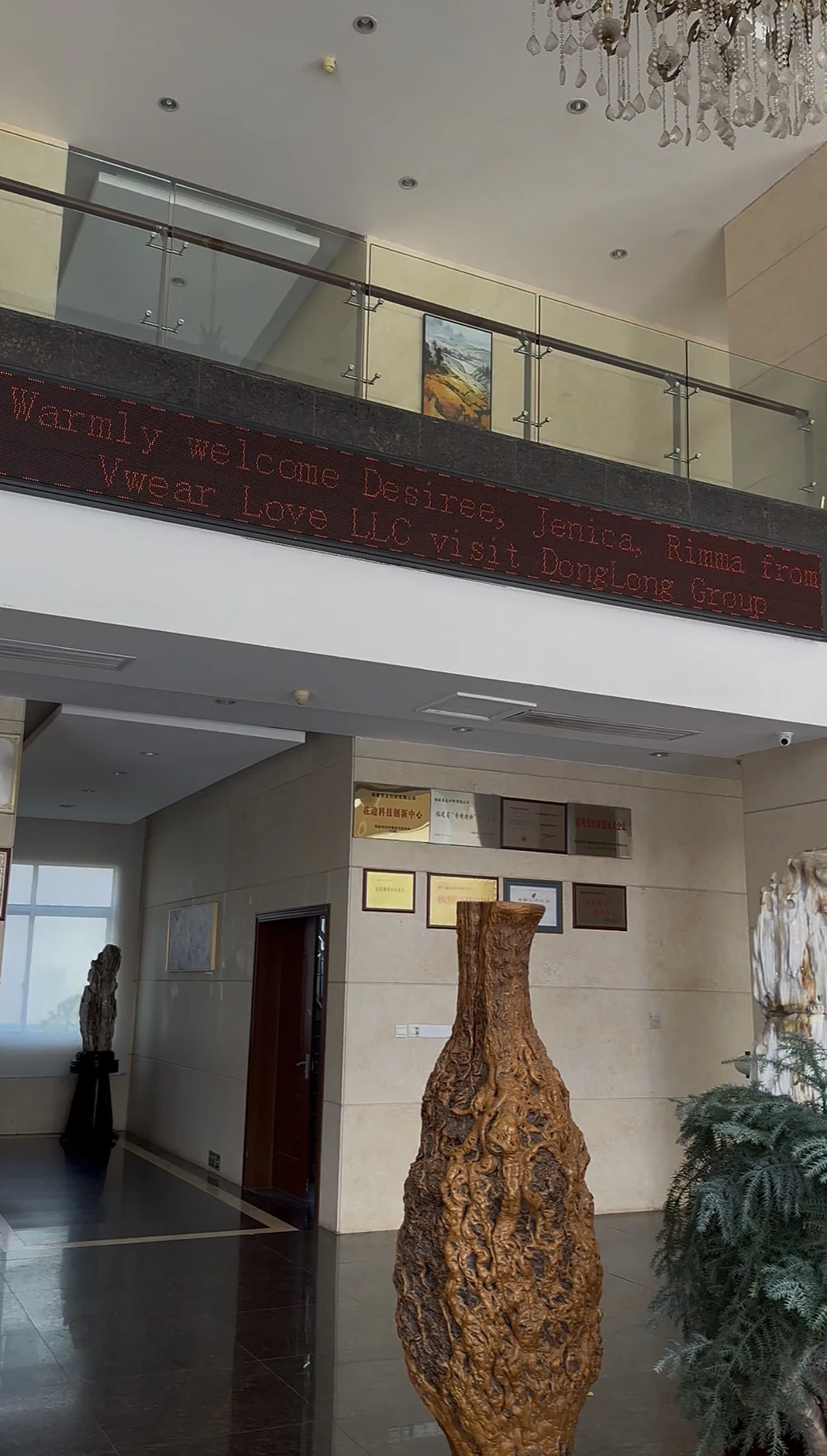
Before the public launch, my co-founder and I traveled to China because it mattered to us to see the process for ourselves.
We wanted to know who was making the product, what the working environment looked like, whether employees were being treated appropriately, whether children were anywhere near the manufacturing process, how quality control worked, what could realistically be customized, and which promises sounded much easier in an email than they would be in production.
We worked with a women-owned company to help us navigate the parts of international manufacturing we did not already know. I have never believed that being a founder means walking into every room pretending to be the expert. It means knowing where you need one, asking better questions, and paying close enough attention to protect the standard.
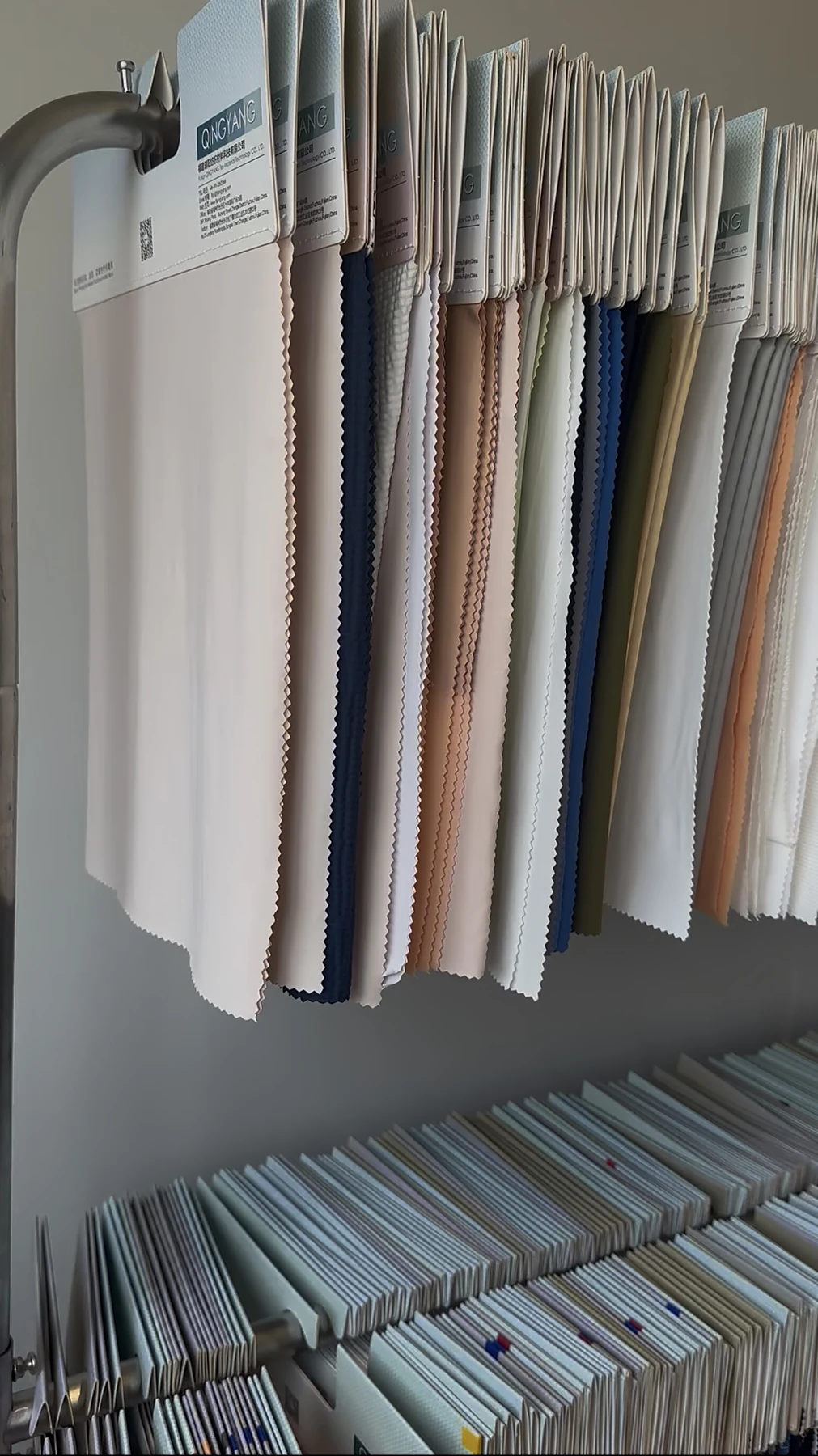
We reviewed materials, met vendors, saw the environment, and learned what it actually takes to move a custom product from an idea in the United States into responsible production overseas. We left encouraged by what we saw and continued the partnership.
That experience follows me directly into JOAT. International sourcing is not sending three emails and choosing the cheapest quote. It is due diligence, communication across time zones and cultures, relationship management, quality control, logistics, and noticing what could become a very expensive problem before inventory is already moving across an ocean.
We intentionally leaned on women-owned partners and sourcing specialists where their expertise could make the product, process, and company stronger. That mattered to the way we wanted to build, not only the way we wanted to market.
The campaign
Eventually, we had to make strangers understand why this needed to exist.
The product work was only part of it. We still had to introduce the idea in a way that felt honest, funny, useful, and clear enough for somebody to back before she could try it on.
I led much of the creative direction and public-facing storytelling behind the Kickstarter. The campaign had to translate technical materials, intimate health concerns, founder intent, and a product people had never worn into something they could understand and trust.
The campaign ran from April 15 through June 14, 2025, with a $45,000 goal. It closed at $45,364, reaching 101 percent funding.
That extra $364 still makes me smile. We did not float past the goal with millions to spare. We built the runway, told the story, kept showing up, and crossed the line. Every part of the brand had to do its job.
The commercial
I co-wrote it, co-produced it, helped direct it, and got in front of the camera too.
The commercial was not a separate little marketing ornament. It was part of the brand language. It had to explain the problem without making periods feel shameful, show the product without turning women into anatomy diagrams, and still be entertaining enough that somebody would keep watching.
That piece continued to headline the website and has remained part of the brand’s social presence. Seeing work live beyond the moment you made it is strange, but also deeply satisfying.
Also worth mentioning: I wrote and co-developed that commercial while I was less than six months postpartum, and part of it was filmed inside my own home. Because apparently building a company, making a human, and producing branded content were all reasonable things to do at the same time.
Really, this entire chapter unfolded before, during, and immediately after my son was born. He was part of nearly every meeting and call, virtually and in person. China was the one exception. Even I have limits.
There is no polished founder-story version where any of that was easy. It was incredibly hard. But it was possible. Women are absolute badasses, and mothers are building extraordinary things in the margins every single day.
Why I stepped away
I loved the mission. I also knew the day-to-day role was not my forever lane.
I care deeply about the product, the advocacy behind it, and what we were trying to give women. I also learned that loving fashion, product creation, and a company’s mission does not automatically mean you are meant to spend your life operating that specific business every day.
I wanted to get back to my core: broader problem solving, variety, private client relationships, events, travel, brands, households, emergencies, and projects that refuse to stay inside one category. Stepping down was not me deciding the work did not matter. It was me recognizing what years of building it had taught me about where I do my best work.
The company has since released the biker-short version, another product I helped design and develop during the founding years. I am incredibly proud of my contributions, but I do not confuse that pride with present ownership of the story. I am simply their muse from a distance now. 😉
I will not share the unreleased concepts I worked on. Those belong to the company and to whatever direction the current team chooses.
Why this story belongs on JOAT
Because it explains the range better than a list of services ever could.
VWEAR taught me how to carry an idea through materials research, product development, naming, international sourcing, manufacturing relationships, a complete brand, a website, a resource library, social strategy, a commercial, and a funded campaign. That same ability to see the full chain, learn what I do not know, find the right experts, and keep the details moving is what I now bring to JOAT clients. Yes, I helped build vagina pants. More importantly, I know how to take an idea that sounds slightly unhinged in its first sentence and help make it real.
Have an idea that needs a second brain?